

Delving into Functional medicine vs. traditional healthcare, this introduction immerses readers in a unique and compelling narrative. It sheds light on the distinctions between these two healthcare approaches, offering a glimpse into their contrasting philosophies and practices.
As we journey through the core principles, patient-centered care, treatment approaches, and holistic vs. symptom-based approaches, a deeper understanding of Functional Medicine and Traditional Healthcare will unfold.
Definition of Functional Medicine and Traditional Healthcare
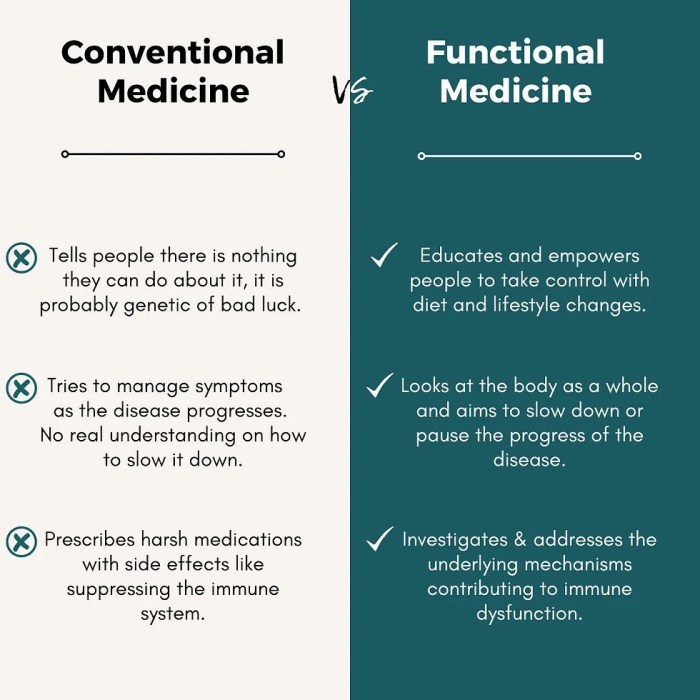
Functional Medicine:Functional medicine is a holistic approach to healthcare that focuses on identifying and addressing the root causes of diseases. It aims to treat the whole person rather than just the symptoms, considering factors such as genetics, lifestyle, and environment.Traditional Healthcare:Traditional healthcare, on the other hand, follows a more conventional approach to medicine, focusing on diagnosing and treating specific symptoms or conditions.
It often relies on pharmaceutical interventions and standardized treatment protocols.
Differentiation in Treatment Philosophies
- Functional Medicine: Emphasizes personalized and patient-centered care, looking at the interconnectedness of various bodily systems and addressing underlying imbalances.
- Traditional Healthcare: Focuses on symptom management through medications and procedures without always delving into the root causes of health issues.
Primary Focus of Functional Medicine and Traditional Healthcare
- Functional Medicine: Prioritizes prevention and proactive health management, aiming to optimize overall wellness and quality of life.
- Traditional Healthcare: Primarily concentrates on treating acute or chronic conditions as they arise, often using a reactive approach to healthcare.
Core Principles and Practices
Functional medicine focuses on treating the root cause of illness rather than just managing symptoms. This approach involves looking at the body as a whole system and addressing the underlying imbalances that may be causing health issues. In contrast, traditional healthcare typically focuses on treating symptoms with medications or surgeries without always considering the underlying causes.
Core Principles of Functional Medicine
- Personalized care tailored to individual needs
- Understanding the interconnectedness of body systems
- Promoting optimal health and prevention of disease
- Using a holistic approach to treatment
Key Practices in Functional Medicine
- Extensive patient history and evaluation
- Functional testing to assess underlying imbalances
- Nutrition and lifestyle interventions
- Collaborative approach involving both patient and practitioner
Comparison with Traditional Healthcare
Functional medicine differs from traditional healthcare in its focus on addressing the root cause of illness rather than just managing symptoms. While traditional healthcare may rely more on medications and surgeries to treat symptoms, functional medicine emphasizes personalized care, prevention, and a holistic approach to treatment.
By looking at the body as a whole system and considering the interconnectedness of various body systems, functional medicine aims to promote optimal health and address underlying imbalances for long-term wellness.
Patient-Centered Care
Patient-centered care is a fundamental aspect of functional medicine, focusing on building a strong relationship between the healthcare provider and the patient to ensure personalized and comprehensive care.
Emphasis on Patient-Centered Care in Functional Medicine
In functional medicine, patients are actively involved in their healthcare journey. Practitioners take the time to listen to the patient's concerns, understand their unique needs, and work together to create a tailored treatment plan.
Examples of Prioritizing Patient-Centered Care in Functional Medicine
- Practitioners spend more time with patients during appointments, allowing for in-depth discussions and a deeper understanding of the patient's health history and lifestyle.
- Treatment plans in functional medicine are individualized based on the patient's specific needs and preferences, incorporating nutrition, lifestyle changes, and complementary therapies.
Traditional Healthcare and Patient-Centered Care
In traditional healthcare, patient-centered care may sometimes take a back seat due to time constraints, standardized treatment protocols, and a focus on symptom management rather than root cause resolution.
Impact of Patient-Centered Care on Treatment Outcomes
Research has shown that patient-centered care leads to better treatment adherence, improved patient satisfaction, and ultimately, better health outcomes. Patients who feel heard and involved in their care are more likely to actively participate in their treatment plan and experience positive results
Treatment Approaches and Modalities
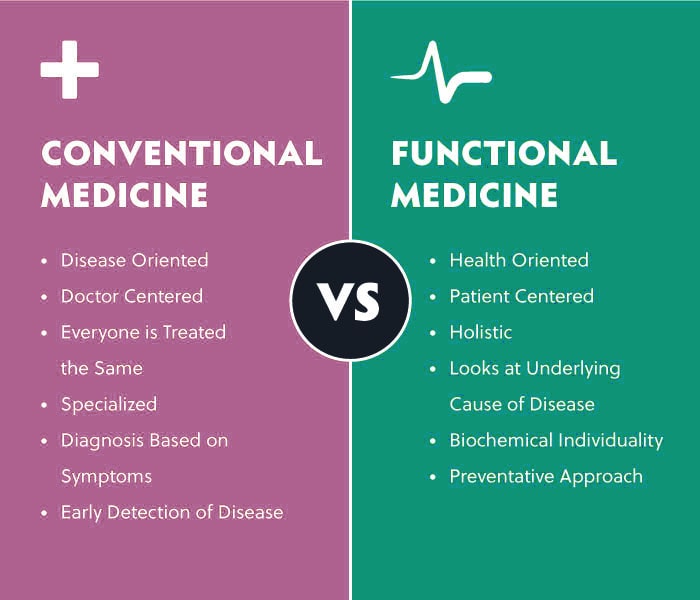
Functional medicine takes a personalized approach to treatment, focusing on addressing the root causes of health issues rather than just symptoms. This involves a variety of treatment approaches and modalities that differ from traditional healthcare practices.
Treatment Approaches in Functional Medicine
Functional medicine utilizes a combination of nutrition, lifestyle modifications, supplements, stress management techniques, and alternative therapies to restore balance in the body and promote optimal health. Practitioners often conduct thorough assessments of a patient's health history, genetics, and environmental factors to create individualized treatment plans.
Modalities in Functional Medicine
Some of the modalities commonly used in functional medicine include functional lab testing, such as comprehensive blood work and specialized tests to assess gut health, hormone levels, and nutrient deficiencies. Additionally, treatments may involve acupuncture, chiropractic care, herbal medicine, and mind-body therapies like meditation and yoga.
Comparison with Traditional Healthcare
In contrast, traditional healthcare typically relies on pharmaceutical interventions, surgery, and symptom management without always addressing the underlying causes of illness. Treatment plans are often standardized and may not consider individual variations in genetics, lifestyle, and environment. Diagnostic tests in traditional healthcare may focus more on disease detection rather than prevention or optimization of health.
Holistic vs. Symptom-Based Approach

In healthcare, the approach taken towards treating patients can vary significantly. Functional medicine typically follows a holistic approach, while traditional healthcare often adopts a symptom-based approach. Let's delve into the differences between these two approaches and evaluate their respective benefits and drawbacks.
Holistic Approach in Functional Medicine
A holistic approach in functional medicine focuses on treating the individual as a whole, taking into account all aspects of their health including physical, emotional, mental, and even spiritual well-being. This approach aims to address the root causes of health issues rather than just alleviating symptoms.
By looking at the interconnectedness of various bodily systems, practitioners aim to promote overall wellness and prevent future health problems.
Symptom-Based Approach in Traditional Healthcare
Traditional healthcare often follows a symptom-based approach where the primary focus is on addressing specific symptoms or diseases. This approach tends to rely heavily on prescription medications or interventions targeted at managing individual symptoms without always considering the underlying causes.
While this approach can provide quick relief for acute issues, it may not always lead to long-term health improvements.
Benefits and Drawbacks
- Benefits of Holistic Approach:By addressing the root causes of health issues, the holistic approach can lead to long-lasting improvements in overall well-being. It also empowers patients to take an active role in their health and encourages lifestyle changes that promote health and wellness.
- Drawbacks of Holistic Approach:The holistic approach may require more time and effort to see results, as it involves a comprehensive evaluation of the individual's health. It may also be challenging to find practitioners who specialize in this approach.
- Benefits of Symptom-Based Approach:The symptom-based approach can provide quick relief for acute issues and is often the go-to method for addressing immediate health concerns. It may also be more readily available within the traditional healthcare system.
- Drawbacks of Symptom-Based Approach:Addressing symptoms without considering the underlying causes can lead to recurring health issues and a reliance on medications to manage symptoms. It may also overlook the interconnected nature of various health issues.
Conclusive Thoughts
In conclusion, the discourse on Functional medicine vs. traditional healthcare unveils a dynamic interplay between personalized care and conventional practices. By embracing patient-centric ideologies and diverse treatment modalities, both approaches aim to optimize health outcomes and foster holistic well-being.
Expert Answers
How does Functional Medicine differ from Traditional Healthcare?
Functional Medicine focuses on addressing the root cause of illness rather than just symptoms, while Traditional Healthcare often treats specific symptoms without considering underlying causes.
Is patient-centered care more prominent in Functional Medicine or Traditional Healthcare?
Patient-centered care is typically emphasized more in Functional Medicine, where practitioners strive to involve patients in their healthcare decisions and address individual needs comprehensively.
What are some common treatment approaches in Functional Medicine?
Functional Medicine often utilizes dietary interventions, lifestyle modifications, supplements, and personalized treatment plans tailored to each patient's unique biochemistry.
How does the holistic approach in Functional Medicine differ from the symptom-based approach in Traditional Healthcare?
The holistic approach in Functional Medicine considers the interconnectedness of body systems and focuses on overall wellness, whereas the symptom-based approach in Traditional Healthcare typically addresses individual symptoms without considering the broader health picture.